Reaching toward an Unknowable Future
This singular experience we all share

Fourteen weeks ago, I received a lung transplant at Mount Sinai Hospital in New York. The years—and especially the last months—leading up to that event were the most challenging of my life. I wrote this just days before I got the call:
The experience of air hunger, of being starved for oxygen, is at once intensely physical and profoundly existential. Sometimes I feel as if enormous hands are twisting my chest like a wet towel. Sometimes I imagine a house landing on me—a Wizard of Oz redux. Sometimes when I cough, I get so lightheaded that I feel myself leaving my body. A moment of panic follows as this body registers that it is going to die. This can happen fifty times a day. Then I have to do whatever is necessary to come back to myself. I sit down. I turn up my oxygen. I try to remember that I’m still here, not just this very sick person but all of me: immigrant and Jewess, creative writer, freelance editor, cookbook author and exuberant home cook, midlife divorcee, collector of friends, mother of four mensches plus two mensches-in-law, and Oma to one enchanting boy.
I first heard the clinical term “air hunger” four years ago. After several weeks of crippling breathlessness, I was diagnosed with interstitial lung disease, a cluster of pulmonary conditions that cause scar tissue (“fibrosis”) to form on the lungs, gradually reducing the available real estate for air, and leading to relentless coughing, increasing shortness of breath, and extreme fatigue. The endgame for most patients, I soon learned, is total dependence on supplemental oxygen followed by a lung transplant—or death.
Steroids, other medications, and inhalers temporarily pushed back the wall of my symptoms following my diagnosis. I continued my then-full-time job for a while, and I wrote and published a poem about that fraught period, also called “Air Hunger.” Mostly, I was consumed with interrogating my priorities, invoking what I refer to in my first novel manuscript as the Deathbed Test: if I were about to die, what would I want to have done with my life that I’d not yet accomplished? I made a very short list: three things (named in the above-mentioned poem). I will come back to this list—and the novel manuscript—in later posts.
Even with that heightened awareness of my mortality, a lung transplant sounded like science fiction to me. Was I really going to let a surgeon sew someone else’s vital organs into my body? Someone who had been going about their business the day before and then randomly lost their life? As a fiction writer, I am a big one for rehearsing possible futures, but a transplant felt beyond my imagination.
Fast forward three years, through a lingering case of COVID, and two bouts of pneumonia following common colds. After each episode, my lung function dropped another ten percent—and never rebounded. I began needing oxygen for all activities. Last summer, my pulmonologist told me it was time to start the transplant evaluation process. “You don’t want to wait until you’re too sick to qualify.” I was 58 years old. Around that time, I lucked into a pulmonary fibrosis support group with many members who had been through successful transplants. It began to sound less like science fiction and more like a distant prospect I could contemplate.
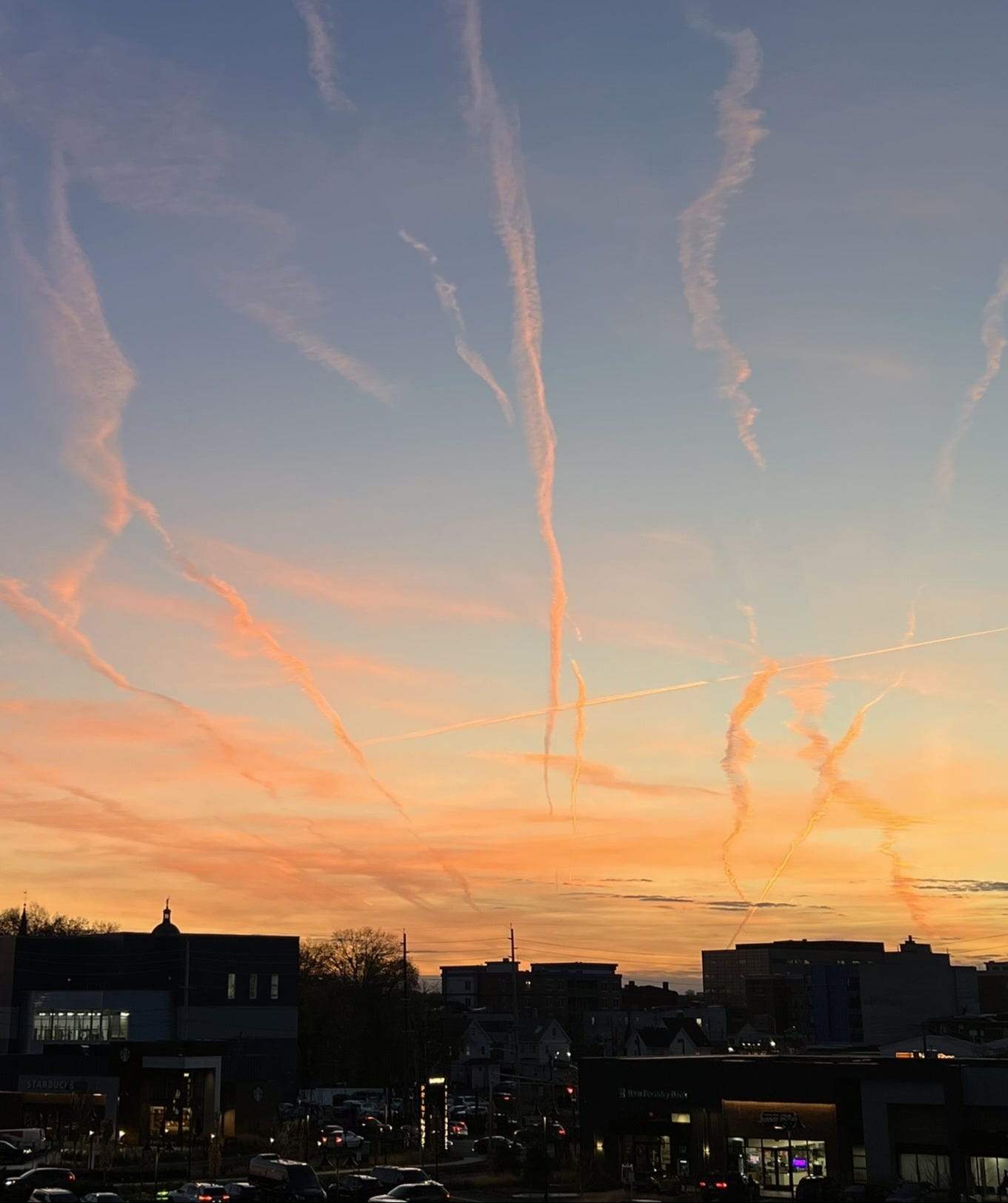
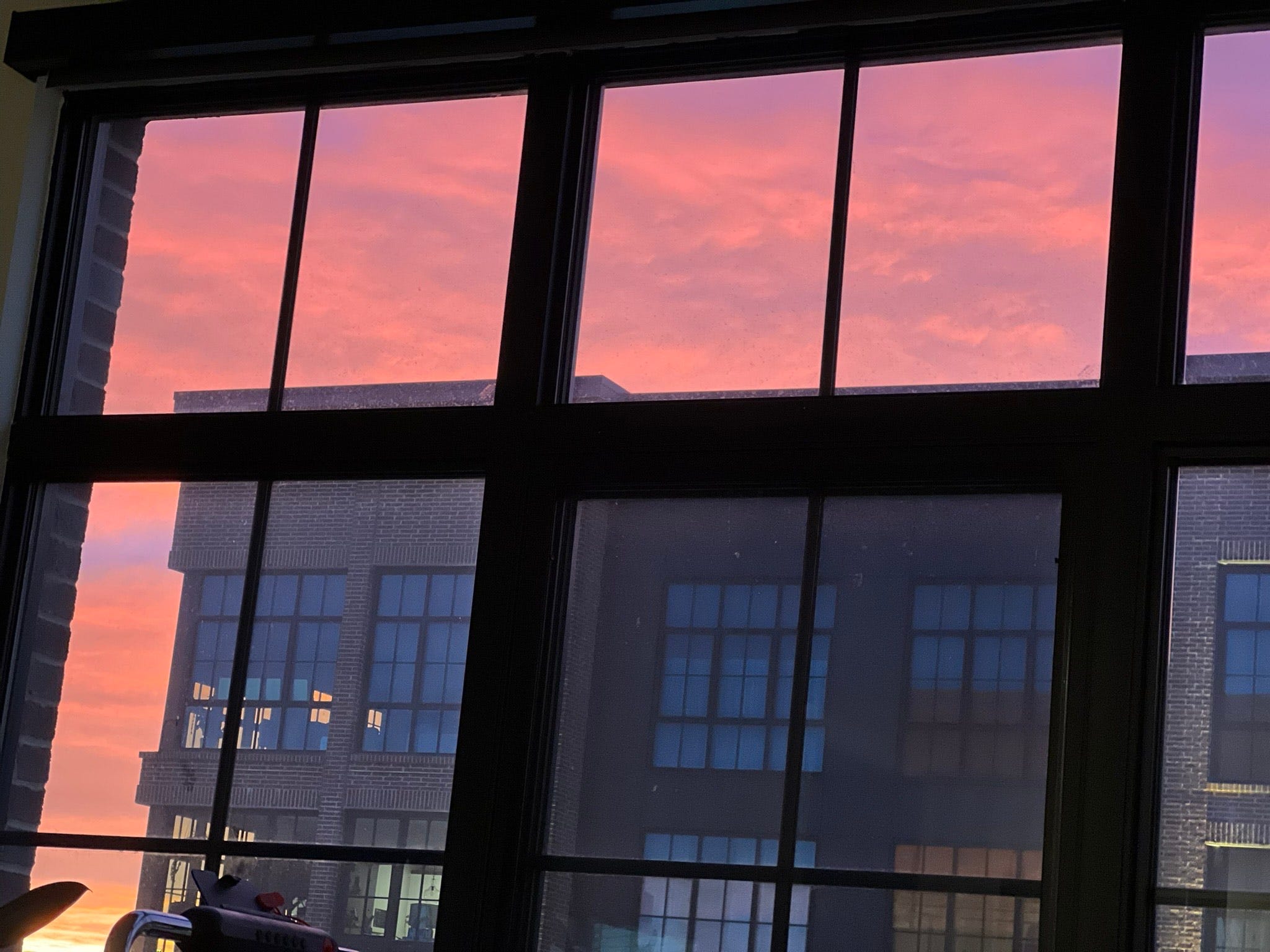
Then, in the dead of winter, when I wasn’t going anywhere except the waiting rooms of Mount Sinai Hospital for the endless string of tests to qualify for transplant, I caught whooping cough (a.k.a., pertussis, which has been on the rise since the post-COVID vaccine backlash). All hell broke loose in my respiratory system. My O2 saturation (the measure of how much oxygen is circulating in the blood) took a nosedive as soon as I stood up, my vision greyed with every coughing fit, and I found myself placing chairs in strategic locations around my small apartment because I couldn’t make it from one room to another in a single trip. My doctor ordered bigger oxygen tanks. I stopped driving. I struggled through the last of my transplant evaluation tests. I mostly stayed on my blue velvet sofa and watched the sky outside my big windows, comforted by the changing watercolors of the sunsets.
On the first day of spring, I got word that I was officially on the transplant list. Another 44 days passed as I waited—literally breathless—to get the call. This is one of the disturbing necessities of surviving interstitial lung disease, even in the early twenty-first century: I had to let the cold fog of death get close enough to cloud my glasses before I could be rescued.
On May 4, 2025, I received my new lung from a donor about whom I still know almost nothing—only that they were much younger than me and from Indiana. (I hope to find out more in time.) Transplant recovery is a twisty road full of potholes, but I’ve been lucky so far: I’m off all supplemental oxygen, and I’ve had no signs of rejection. Much more to come about this whole journey in later posts as well…
Through the strange alchemy of this experience, my idea of “air hunger” has grown to encompass our immense desire for life, for making meaning out of this impossible human experience. Given that life rarely unfolds the way we’ve imagined, how do we recalibrate and redefine what makes it meaningful—so that we can continue to rehearse and envision and reach toward a future that will still, always, be unknowable?
This is what I want to explore with you.
By putting these questions out here, instead of just keeping them rolling around in my head, I am hoping to gradually gather a community around me, to grow some wisdom about this singular experience we all share—as creatures with limited lifespans and flawed bodies, but also with searching minds, inventive souls, and craving hearts.
I look forward to digging in together.
You capture something so interesting in the idea that this experience of yearning is so universal but also singular. How strange that we all will decline in function (sooner or later) but there’s no roadmap to redefine our identity and the meaning of our lives? Is the struggle to do so a necessary part of life? Or is it something about the way we look at purpose and identity in our culture? Just some musings that you got me thinking about….I’m excited to read more :)
This describes what I am feeling to a tea! What is coming up for me is a quote from a beautiful young woman named Claire who had CF and did not survive her transplant surgery. She said hello I am Claire, and I am dieing faster than most of you. We are all dieing.